Best Supplement for Brain Fog 2026: Citicoline, Lion’s Mane & B Vitamins
Quick summary: My top pick for brain fog is Jarrow Formulas Citicoline (9.4/10), the single active with the most consistent human attention data, about $42.99 at HerbsPro on September 19, 2026. If budget matters more, Jarrow’s Methyl B-12 lozenges cover the deficiency angle for about seven dollars.
Brain fog is one of those complaints people describe instantly but doctors rarely test for: the world feels muffled, sentences take longer to land, and you reread the same paragraph three times. It is also not a single condition. Fog can trace back to short sleep, low B12, anemia, thyroid problems, depression, or medication side effects, which is why I treat supplements here as targeted tools rather than a cure-all.
I ranked the products below on four things: whether the active ingredient has human trials behind it, whether the label discloses every dose, whether the form matches what studies actually used, and price per month at observed retail prices. If you suspect a medical cause, a basic blood panel will tell you more than any bottle in this article.
How We Evaluated
- Citicoline Cochrane review: PMID 15846601. CDP-choline showed modest improvements in memory and behavior in trials of chronic cerebral disorders.
- Lion’s mane in young adults: PMID 38004235. A 2023 double-blind trial found small cognitive and stress effects from lion’s mane supplementation.
- Lion’s mane in mild cognitive impairment: PMID 18844328. Sixteen weeks improved cognitive scores in older adults, with benefits fading after stopping.
- DHA and memory: PMID 20434961. The MIDAS trial showed 900 mg DHA daily improved episodic memory in age-related cognitive decline.
- B vitamins and cognition: PMID 34432056. A 2022 meta-analysis found B vitamins help specific deficient groups rather than sharpening everyone.
The pattern across the evidence is honest but useful: correcting a deficiency works, citicoline has repeatable attention effects, and lion’s mane is promising but thin. Everything below is chosen to be safely tryable for two to three months, which is roughly how long the trials lasted.
Top 4 Supplements for Brain Fog of 2026
1. Jarrow Formulas Citicoline (CDP Choline)
EDITOR’S CHOICERating: 9.4/10
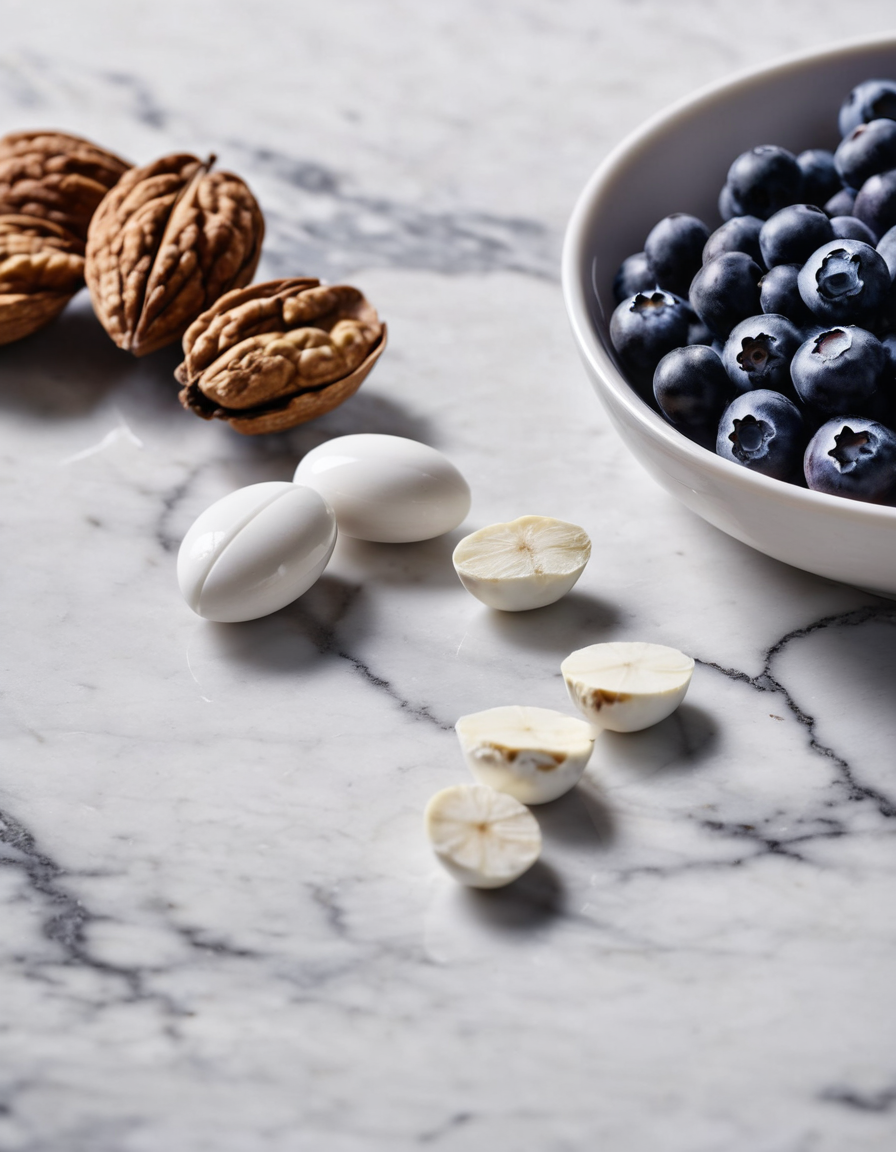
What you get: 120 capsules of citicoline sodium at 250 mg each, a single active ingredient with no proprietary blend, from a brand that has kept this formula unchanged for years.
Value and quality context: The approximate observed price was $42.99 on September 19, 2026. That works out to roughly $0.36 to $0.72 per day depending on whether you take one or two capsules, which is mid-pack for a studied nootropic.
Citicoline breaks down into choline and cytidine, both raw materials your neurons use for membrane repair and signaling, and the Cochrane review above found consistent if modest cognitive effects. I put it first because it is the only option here with trial data across multiple populations and a label that tells you exactly what you are buying.
The honest limits: trial doses ranged widely, so one capsule may feel subtle, and if your fog comes from poor sleep, citicoline will not out-argue exhaustion.
- Single studied active with human attention data instead of a kitchen-sink blend.
- 250 mg capsules make it easy to scale from 250 to 500 mg to match trial doses.
- Jarrow discloses the exact form, citicoline sodium, on the front label.
- Two-month supply at one per day keeps a fair trial affordable.
- Costs more per bottle than every other pick in this roundup.
- Headache or restlessness occasionally shows up at the higher dose.
- Effects in healthy sleep-deprived people are much less studied than in patients.
2. Jarrow Formulas Methyl B-12 1000 mcg
BEST VALUERating: 9.2/10
What you get: 100 lemon-flavored lozenges of 1,000 mcg methylcobalamin, the active form of B12, dissolved under the tongue once daily.
Value and quality context: The approximate observed price was $6.99 on September 19, 2026. Three months of coverage for seven dollars makes this the cheapest legitimate experiment in the article.
Low B12 is among the few well-documented reversible causes of foggy thinking, and vegetarians, adults over 50, and people on acid reducers are the usual candidates. I like the sublingual methylcobalamin format because it bypasses the stomach absorption step that some people handle poorly, and Jarrow effectively invented this lozenge category.
- Methylcobalamin is the active form that skips conversion entirely.
- Under seven dollars removes any cost excuse for a deficiency check.
- Sublingual route suits people with absorption issues.
- Three-month supply from a single small bottle.
- If your B12 status is already fine, extra B12 will not sharpen anything.
- Covers B12 only, so folate or B6 gaps need a separate answer.
- Does not address sleep, stress, or thyroid causes of fog at all.
3. Host Defense Lion’s Mane
BEST MUSHROOMRating: 9.0/10
What you get: 60 capsules of lion’s mane mycelium at 500 mg each, grown by the brand itself in the US rather than bought as a commodity powder.
Value and quality context: The approximate observed price was $25.46 on September 19, 2026. At the label serving of two capsules, one bottle is a one-month supply, so a fair trial costs about $25 monthly.
Lion’s mane has real human data, including the small Mori trial in mild cognitive impairment, but I want to be clear that both trials enrolled few dozen people at most. Host Defense earns its slot through vertical integration: the company grows its own mycelium, which at least means you know what you are getting, a rarity in mushroom supplements.
- Backed by two human trials, which is two more than most mushroom products can cite.
- Brand grows its own mycelium with traceable US production.
- Well tolerated with rare reports of skin rash.
- Capsules avoid the earthy taste that puts people off the powder.
- Human evidence base is small and short-term, so expectations should be modest.
- Mycelium-on-grain delivers less of the fruiting-body compounds some buyers want.
- Only a one-month supply per bottle at the label serving.
4. Sports Research Vegan Omega-3 Algae Oil
BEST VEGAN DHARating: 8.8/10
What you get: 30 servings of algal oil softgels delivering roughly 500 mg of combined DHA and EPA per serving, carrageenan-free and third-party tested.
Value and quality context: The approximate observed price was $19.95 on September 19, 2026. That is about $0.66 a day for the only vegan source of preformed DHA, the brain’s dominant structural fatty acid.
The MIDAS trial showed DHA improving episodic memory in people with age-related cognitive decline, and vegans who skip fish entirely are the group most likely to run low. Algae oil solves this at the source, because flax-based omega-3s convert poorly to DHA in humans. I ranked it fourth only because the per-serving dose trails concentrated fish oils.
- Preformed DHA from algae instead of unreliable flax conversion.
- Carrageenan-free softgels with third-party testing.
- Sustainably sourced without the fishy aftertaste of marine oils.
- Reasonable monthly cost for a structural brain nutrient.
- Lower combined EPA and DHA per serving than concentrated fish oil.
- Trials show clearest benefit where dietary intake is already low.
- Softgels still require taking two or more for higher intakes.
Comparison Table
| Product | Form | Dose per serving | Count | Approximate price | Best for |
|---|---|---|---|---|---|
| Jarrow Citicoline | Capsule | 250 mg citicoline | 120 caps | $42.99 | Studied attention support |
| Jarrow Methyl B-12 | Lozenge | 1,000 mcg methylcobalamin | 100 loz | $6.99 | Deficiency-related fog |
| Host Defense Lion’s Mane | Capsule | 1,000 mg mycelium | 60 caps | $25.46 | Mushroom approach |
| Sports Research Algae Oil | Softgel | ~500 mg DHA/EPA | 30 servings | $19.95 | Vegan DHA intake |
How to Choose a Brain Fog Supplement
Start by asking what kind of fog you actually have. If you sleep six hours, your fog has a name already, and no capsule in this article fixes chronic sleep debt. If the fog arrived with fatigue, cold intolerance, or heavy periods, anemia and thyroid panels deserve a blood draw before any supplement does.
Second, match the tool to the mechanism. Citicoline supports membrane and neurotransmitter raw materials, B vitamins correct deficiency, DHA builds structure, and lion’s mane remains a modest-evidence wildcard. Taking all four at once makes it impossible to know which one earned its keep, so I would add one at a time and give it eight weeks.
Third, read labels for the two deal-breakers: proprietary blends that hide doses, and mushroom products that never say whether they use mycelium or fruiting bodies. A company that hides its dose usually has a reason, and the trials in this article all used disclosed amounts.
Fourth, budget honestly. Deficiency correction costs pennies; the premium picks run a dollar a day. If you are going to spend on one thing, a blood test for B12, ferritin, and thyroid is the better purchase, because it converts guessing into knowing which of these products even applies to you.
Finally, give any pick a fair window. Eight weeks at a consistent dose is the minimum for most of the trials cited above, and tracking one concrete marker, like how often you reread a paragraph, tells you more than vibes. If nothing shifts by then, the honest next step is a clinician, not another bottle.
For deeper ingredient reading, my full lion’s mane ranking and the citicoline deep dive cover the evidence in more detail than a roundup can.
This article is for information only and is not medical advice. Supplements can interact with medicines. Talk with a clinician before starting anything new, especially if you are pregnant, managing a condition, or taking prescription drugs. Prices and formulations change; the label is the final authority.