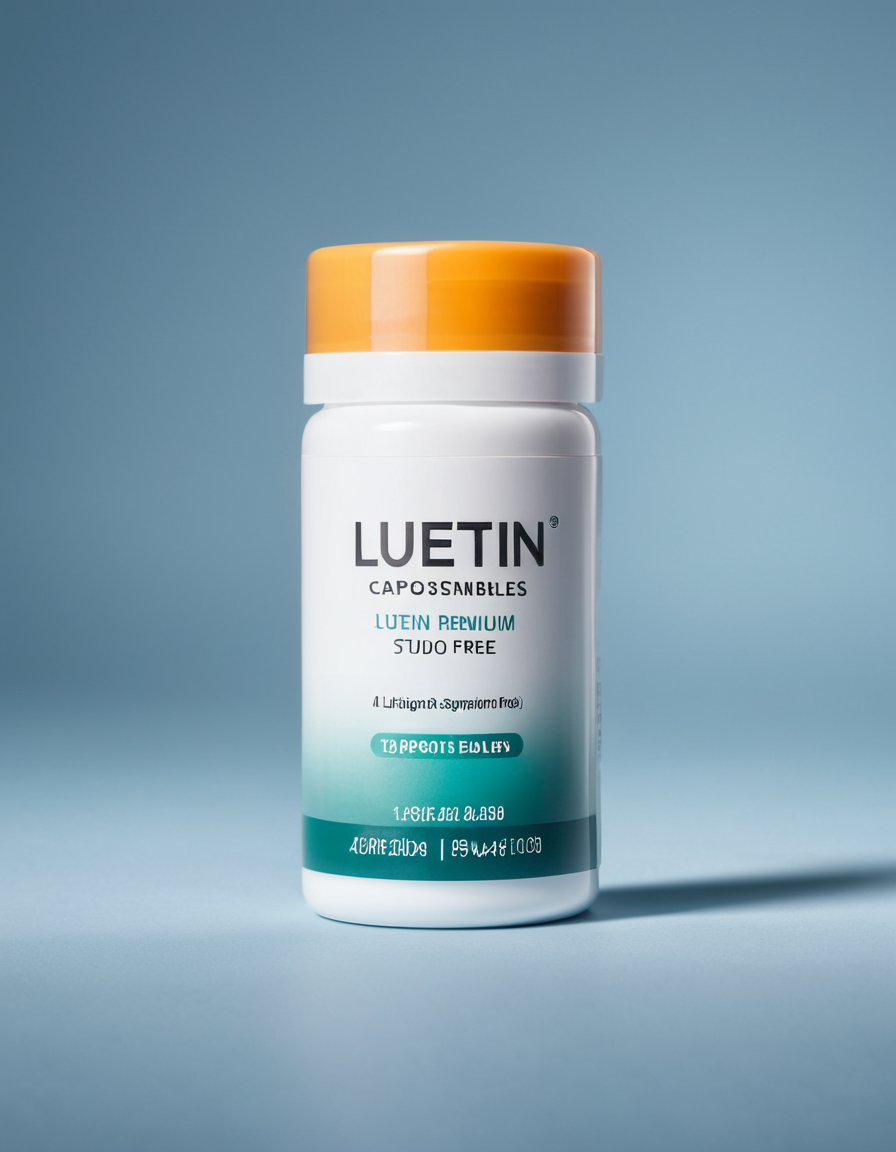
Best Lutein & Zeaxanthin Supplement in 2026: Top 5 for Eye Health
Quick summary: NOW Foods Lutein & Zeaxanthin is my #1 pick at 9.7/10. Doctor’s Best Lutein and 21st Century Lutein are the runners-up. I ranked these products by declared lutein and zeaxanthin amounts, formula transparency, fat-compatible delivery, servings, price, and fit with human studies.
Bottom line: If you want the short answer — the picks in this guide are ranked by real-world value, third-party testing, and dose transparency. Published clinical research on Lutein & Zeaxanthin (e.g., PMID: 23644932, PMID: 34157098) supports its key benefits when used at studied doses. Scan the Quick summary above for the top pick, then read the full breakdown below before you buy.
Sources: PubMed (U.S. National Library of Medicine).
Lutein and zeaxanthin are carotenoids concentrated in macular pigment, which makes them relevant to people comparing nutritional support for long-term eye health. I approached these products cautiously: supplements can raise macular pigment density, but that biomarker does not prove that a healthy person will avoid vision loss or immediately feel less screen fatigue.
The label details matter because free lutein, lutein esters, zeaxanthin isomers, and larger marigold-extract weights are easy to blur together. I compared the stated net carotenoid yield and kept ordinary eye exams, diet, sunglasses, and screen ergonomics in their proper place.
How We Evaluated
I compared separate lutein and zeaxanthin yields, a practical oil-based form or food directions, serving cost, ingredient transparency, and how closely the formula resembles doses used in macular-pigment research. I did not treat any single-purpose capsule as a complete AREDS2 formula.
- National Eye Institute AREDS/AREDS2 FAQ
- AREDS2 randomized trial (PMID 23644932)
- Macular pigment systematic review (PMID 34157098)
Top 5 Lutein & Zeaxanthin Supplements of 2026
1. NOW Foods Lutein & Zeaxanthin, 60 softgels
Editor’s ChoiceRating: 9.7/10
One softgel provides 25 mg lutein and 5 mg zeaxanthin from Lutemax 2020 marigold extract. NOW directs users to take it with a fat-containing meal, a sensible detail for fat-soluble carotenoids.
At the observed $16.74, the 60 servings cost about $0.28 each. The dose exceeds the familiar 10/2 mg AREDS2 carotenoid amounts, but this is not the complete AREDS2 combination. I also weighed this product against the rest of the list by daily dose, complete serving, format, and the limits of the supporting evidence—not by package claims alone.
- Pros: Transparent two-carotenoid dose and good value
- Cons: Bovine gelatin; not a full AREDS2 formula
2. Doctor’s Best Lutein, 20 mg, 60 softgels
Best QualityRating: 9.5/10
The exact label supplies 20 mg lutein and 1 mg zeaxanthin from marigold in safflower oil. Separate amounts make comparison easier than a combined carotenoid number.
The observed $9.99 price is about $0.17 per serving, an unusually economical route to 20 mg lutein. Its zeaxanthin amount is lower than the roughly 2–4 mg range often used for comparison. I also weighed this product against the rest of the list by daily dose, complete serving, format, and the limits of the supporting evidence—not by package claims alone.
- Pros: Clear individual amounts and low serving cost
- Cons: Only 1 mg zeaxanthin; gelatin softgel
3. 21st Century Lutein, 10 mg, 60 tablets
Best ValueRating: 9.1/10
This straightforward tablet supplies 10 mg lutein and also lists 180 mg calcium. The manufacturer describes it as gluten-free and non-GMO.
At $6.70 observed, it costs about $0.11 per serving, the lowest in this comparison. It does not separately declare zeaxanthin, so it is not a balanced lutein-zeaxanthin choice. I also weighed this product against the rest of the list by daily dose, complete serving, format, and the limits of the supporting evidence—not by package claims alone.
- Pros: Lowest price and a familiar 10 mg lutein dose
- Cons: No separately declared zeaxanthin; tablet is not oil-based
4. Solgar Lutein, 40 mg, 30 softgels
Best High-PotencyRating: 9.0/10
A softgel supplies 40 mg FloraGLO lutein and 2 mg zeaxanthin in safflower oil. The official label states gluten-, wheat-, and dairy-free claims.
The observed $21.74 bottle equals about $0.72 per serving. Forty milligrams is not proved twice as effective as 20 mg, so this is a specialized dose rather than a default upgrade. I also weighed this product against the rest of the list by daily dose, complete serving, format, and the limits of the supporting evidence—not by package claims alone.
- Pros: High lutein dose with exact zeaxanthin yield
- Cons: Highest serving cost and gelatin; dose may be unnecessary
5. Source Naturals Zeaxanthin with Lutein, 10 mg, 60 capsules
Budget PickRating: 8.9/10
Each capsule provides 6 mg lutein and 4 mg zeaxanthin, making it the most zeaxanthin-forward ratio here. The label excludes several common allergens and artificial colors or flavors.
The observed $16.98 price is about $0.28 per serving. Its lutein amount is below the 10–20 mg range common in many trials, so the unusual ratio should be chosen intentionally. I also weighed this product against the rest of the list by daily dose, complete serving, format, and the limits of the supporting evidence—not by package claims alone.
- Pros: Distinct zeaxanthin-forward formula and clear amounts
- Cons: Lower lutein dose; gelatin beadlet capsule
Comparison Table
| Product | Dose | Form | Servings | Best For |
|---|---|---|---|---|
| NOW Foods Lutein & Zeaxanthin, 60 softgels | 25 mg / 5 mg | Oil softgel | 60 | Balanced two-carotenoid formula |
| Doctor’s Best Lutein, 20 mg, 60 softgels | 20 mg / 1 mg | Oil softgel | 60 | Moderate lutein dose |
| 21st Century Lutein, 10 mg, 60 tablets | 10 mg lutein | Tablet | 60 | Low-cost basic lutein |
| Solgar Lutein, 40 mg, 30 softgels | 40 mg / 2 mg | Oil softgel | 30 | High-dose lutein |
| Source Naturals Zeaxanthin with Lutein, 10 mg, 60 capsules | 6 mg / 4 mg | Beadlet capsule | 60 | Zeaxanthin-forward ratio |
How to Choose the Best Lutein & Zeaxanthin Supplement
Start with the goal. Healthy adults comparing macular-carotenoid products commonly see 10–20 mg lutein with roughly 2–4 mg total zeaxanthin in studies, but there is no US Daily Value or proven loading phase. The key is to compare the Supplement Facts panel at the full serving size. Container counts can look generous while a usable daily amount requires several units, and ingredients with related names may still differ chemically or analytically.
Do not confuse these products with AREDS2. The studied AREDS2 formula contains 10 mg lutein and 2 mg zeaxanthin plus vitamins C and E, zinc, and copper, and the National Eye Institute limits its use to defined AMD risk groups under eye-care guidance. This distinction protects against a common shopping error: copying a study dose without confirming that the retail ingredient and outcome match the study. Human evidence can support a narrow conclusion while leaving broader marketing claims uncertain.
Because these compounds are fat-soluble, an oil softgel or use with a meal containing fat is reasonable. Judge a long-term nutritional intervention over months, not days, and do not chase an immediate sensation. A simple personal log can record the dose, timing, adherence, relevant outcome, and adverse effects. Change one variable at a time when possible. That does not turn self-tracking into a clinical trial, but it makes the decision to continue or stop more disciplined.
Current and former smokers should avoid beta-carotene-containing versions of the older AREDS formula. Ask a clinician during pregnancy, breastfeeding, medication use, or eye-disease treatment, and seek prompt eye care for sudden blur, flashes, floaters, distortion, or vision loss. Supplements also do not replace diagnosis or standard care. New, severe, or persistent symptoms deserve professional assessment, and a pharmacist can help screen the exact ingredient list against medications and other supplements.
The evidence summaries above should also shape expectations. A statistically significant biomarker is not necessarily a noticeable benefit, and a small short-term study cannot establish long-term disease prevention. I prefer a modest, label-directed trial with a stopping rule over indefinite use driven by hope.
Finally, compare value honestly. Use cost per full daily amount, not merely cost per capsule or scoop, and account for how many days the container lasts at that amount. A lower sticker price may be poor value if the serving is far below the dose you intended to compare.
Third-party testing deserves precise language. A manufacturer may test identity, microbes, heavy metals, or finished-product potency without publishing a consumer-facing certificate for every lot. Sports certification answers a narrower question about prohibited substances. I credited a specific disclosed program where the research documented one, but I did not translate vague “quality tested” wording into an independent guarantee. If verification is central to your decision, ask which laboratory performed the test, whether the finished product was tested, and whether a current lot certificate is available.
Form also affects adherence. A modest serving taken consistently is a more faithful test than an ambitious protocol abandoned after a week. Softgels can simplify fat-soluble ingredients; vegetarian capsules avoid gelatin; tablets may deliver more material but can be large; powders make gram-level dosing economical but require measuring; liquids permit small adjustments while adding taste and, sometimes, alcohol. Choose a format you can use exactly as directed, then confirm allergens, sweeteners, oils, capsule materials, and every active ingredient on the current package.
Before buying, write down what success would mean and when you will reassess. A useful plan specifies one measurable outcome, the label-directed serving, a time window informed by studies, and clear reasons to stop. Improvements can coincide with sleep, training, diet, medication, or expectation, so a personal trial cannot establish causation. If nothing meaningful changes by the planned review date, continuing indefinitely or increasing the dose is not automatically justified. That framework saves money and reduces unnecessary exposure.
Storage and label changes are easy to overlook. Keep the product under the conditions printed on its package, away from children, and check the expiration date and seal. Retail pages and prices can change after publication, so the Supplement Facts panel on the container you receive should control. If its amounts, serving size, or warnings differ materially from the researched version, pause and reassess instead of assuming the old comparison still applies. Record the lot number if you contact the manufacturer about quality, ingredients, or an adverse event.
FAQ
Do lutein and zeaxanthin help everyone prevent AMD?
No. The clearest clinical guidance concerns the complete AREDS2 formula for people with intermediate AMD or a qualifying history, not prevention in healthy adults. Check the exact product directions and personal medical context before applying a general research range.
How long should I try a lutein and zeaxanthin supplement?
Macular-pigment trials often last six months or longer. These products are not fast symptom relievers, so set expectations with an eye-care professional and keep routine care in place. Check the exact product directions and personal medical context before applying a general research range.
Is more lutein always better?
No. A 40 mg label is not proven twice as effective as 20 mg. Compare the separate lutein and zeaxanthin amounts, your intended use, and tolerability rather than ranking by the largest number. Check the exact product directions and personal medical context before applying a general research range.
The Bottom Line
NOW Foods takes the top position for its transparent 25 mg lutein and 5 mg zeaxanthin serving, useful oil-softgel format, and fair cost. Doctor’s Best is the value-conscious moderate-dose choice, while 21st Century is a basic lutein-only budget option. None is a complete AREDS2 substitute.
- Read our related supplement review
- Compare another evidence-based supplement guide
- Browse Lutein & Zeaxanthin products at HerbsPro
Sources
- National Eye Institute AREDS/AREDS2 FAQ
- AREDS2 randomized trial (PMID 23644932)
- Macular pigment systematic review (PMID 34157098)
- Screen-user trial (PMID 39963662)
Disclaimer: This article is for informational purposes only and is not medical advice. Supplements are not a substitute for diagnosis or treatment. Consult a qualified health care provider before starting a supplement, especially if you are pregnant, breastfeeding, taking medication, or managing a medical condition. This page contains affiliate links; we may earn a commission at no additional cost to you.

One Comment