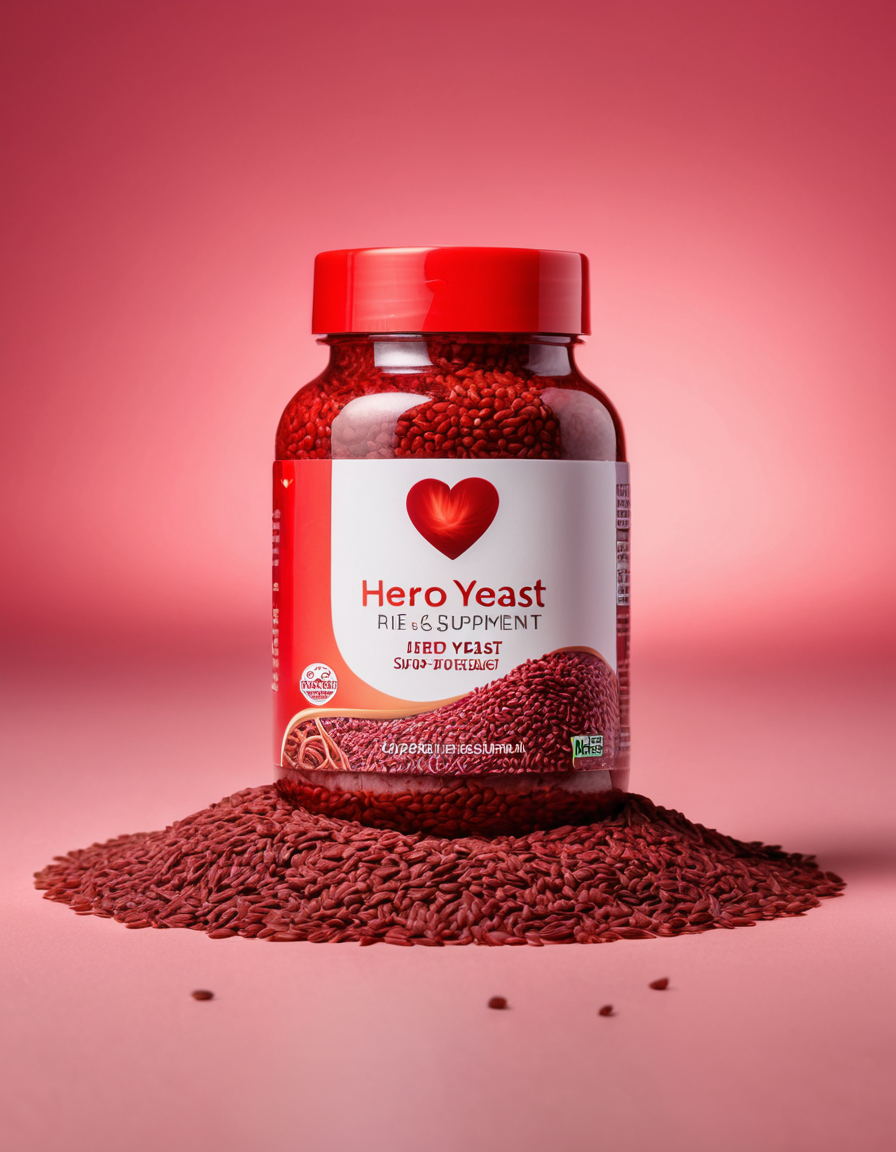
Best Red Yeast Rice Supplement in 2026: Top 4 for Cholesterol Support
Quick summary: My #1 pick is Nutricost Red Yeast Rice 1200 mg, rated 8.6/10. Its simple formula, 60-serving bottle, and approximate observed price of $13.97 on September 5, 2026 make it the best overall value here, although its monacolin K content and lot-specific citrinin results are not publicly established.
Red yeast rice is unusual among supplements because its potential benefit and its main risks come from the same place. Some preparations contain monacolin K, a compound chemically identical to the prescription drug lovastatin. Research supports a cholesterol-lowering effect from certain studied preparations, but that does not prove that any particular retail bottle contains a comparable dose or will produce the same result.
I ranked these products using their verified labels, serving counts, formula simplicity, testing statements, and practical value. I did not treat labeled milligrams of fermented rice as a measure of statin potency. All prices in this article are verified snapshots observed on September 5, 2026 and can change, while Amazon availability may shift between sellers. Always check the bottle you receive because its current label is the final authority.
How We Evaluated
- Cholesterol-lowering evidence: PMID 35111069 pooled 15 randomized trials involving 1,012 participants and found lipid-lowering benefits, but the preparations and doses varied and longer, stronger trials remain necessary.
- Monacolin K variability: PMID 28641460 tested 28 retail brands and found more than 60-fold variation per 1,200 mg, showing why the same labeled red-yeast-rice dose can deliver very different exposure.
- Potency and citrinin contamination: PMID 20975018 found marked monacolin variation across 12 products and elevated citrinin in four, supporting the need for transparent potency and contaminant testing.
I did not use customer anecdotes, popularity, or broad third-party-testing claims as proof of effectiveness. Unless a current certificate identifies the tested lot and reports relevant results, such claims cannot establish monacolin K potency or citrinin control.
Top 4 Red Yeast Rice Supplements of 2026
1. Nutricost Red Yeast Rice 1200 mg
EDITOR’S CHOICERating: 8.6/10
What you get: Veggie capsules providing 1,200 mg of red yeast rice per two-capsule serving, with 120 capsules and 60 servings per bottle.
Value and quality context: The approximate observed price was $13.97 on September 5, 2026. Nutricost states that it uses independent accredited-lab testing and GMP-compliant manufacturing, but I did not locate a public, lot-specific monacolin K or citrinin report.
This is my top pick because it combines the lowest cost per labeled serving in the group with a straightforward formula and a full 60-serving supply. There are no additional active ingredients to complicate label interpretation. The Amazon page had other-seller options but no featured offer when checked, so the price reflects a manufacturer snapshot rather than a current Amazon buy box. Its ranking is a practical comparison, not a guarantee of cholesterol reduction, standardized potency, purity, or better clinical outcomes.
- Pros: Simple formula, 60 servings, lowest observed price per labeled serving.
- Cons: No public lot-specific monacolin K or citrinin result; no featured Amazon offer at verification.
2. NOW Foods Red Yeast Rice Extract, 120 Veg Capsules
BEST SIMPLE VEGAN CAPSULERating: 8.3/10
What you get: Veg capsules providing 1,200 mg of organic red yeast rice per two-capsule serving, with 120 capsules and 60 servings per bottle.
Value and quality context: The approximate observed HerbsPro price was $16.18 on September 5, 2026. NOW describes the product as made with organic red yeast rice and produced to avoid citrinin, although that general statement is not a current, lot-specific certificate.
NOW takes second place for its simple vegan format, recognizable label, and 60-serving count. It contains red yeast rice without CoQ10 or another active ingredient, which makes the formula easy to assess. However, the listing does not quantify monacolin K, and no exact 120-count Amazon match was established. Its citrinin-control language is helpful context, but it does not guarantee the contaminant status, potency, tolerability, or effectiveness of the bottle you receive.
- Pros: Vegan capsules, organic red yeast rice, simple formula, 60 servings.
- Cons: Monacolin K is not quantified; no public lot-specific citrinin certificate or exact Amazon match.
3. Solgar Red Yeast Rice, 60 Vegetable Capsules
LOWEST VERIFIED BOTTLE PRICERating: 8.0/10
What you get: Vegetable capsules providing 1,200 mg of organic Monascus purpureus red yeast rice powder per two-capsule serving, with 60 capsules and 30 servings per bottle.
Value and quality context: The approximate observed HerbsPro price was $13.49 on September 5, 2026, the lowest live verified bottle price in this comparison. The label positions the product as vegan, non-GMO, gluten-free, dairy-free, and kosher, but it contains soy.
Solgar is a reasonable choice for someone who wants a smaller initial purchase and values its dietary-label features. It ranks below the first two products because its 60-capsule bottle supplies only 30 servings, making bottle price alone an incomplete value comparison. Neither a quantified monacolin K dose nor a public lot-specific citrinin result was established. Its organic ingredient and established brand name do not guarantee clinical effectiveness, statin-equivalent exposure, or contaminant-free contents.
- Pros: Lowest verified bottle price, organic powder, vegan and kosher label positioning.
- Cons: Only 30 servings, contains soy, and lacks public lot-specific potency and citrinin data.
4. Natures Craft Red Yeast Rice with CoQ10
BEST HIGHER-CoQ10 COMBINATIONRating: 7.7/10
What you get: Capsules providing 1,200 mg of red yeast rice plus 100 mg of CoQ10 per two-capsule serving, with 120 capsules and 60 servings per bottle.
Value and quality context: The approximate observed price was $22.99 on September 5, 2026, based on a July 2026 tracker snapshot viewed that day. The brand states GMP-compliant manufacturing and third-party testing, but no public lot-specific monacolin K or citrinin report was located.
This is the most relevant option here if you specifically want 100 mg of CoQ10 bundled with red yeast rice. I ranked it fourth because it costs more, and a combination formula makes it harder to identify which ingredient is responsible if you experience a benefit or side effect. CoQ10 does not neutralize monacolin K’s statin-like risks. The current Amazon page also lacked a featured offer during verification, so neither the tracked price nor the testing claim guarantees current availability, purity, potency, or effectiveness.
- Pros: Includes 100 mg CoQ10, 60 servings, exact 120-count Amazon listing.
- Cons: Highest observed price, more complex formula, no public lot-specific potency or contaminant report.
Comparison Table
| Product | Form | Dose per serving | Count | Approximate price | Best for |
|---|---|---|---|---|---|
| Nutricost Red Yeast Rice | Veggie capsules | 1,200 mg per 2 capsules | 120 capsules / 60 servings | $13.97 | Overall value |
| NOW Foods Red Yeast Rice Extract | Veg capsules | 1,200 mg per 2 capsules | 120 capsules / 60 servings | $16.18 | Simple vegan formula |
| Solgar Red Yeast Rice | Vegetable capsules | 1,200 mg per 2 capsules | 60 capsules / 30 servings | $13.49 | Lowest bottle price |
| Natures Craft Red Yeast Rice with CoQ10 | Capsules | 1,200 mg plus 100 mg CoQ10 per 2 capsules | 120 capsules / 60 servings | $22.99 | Red yeast rice with CoQ10 |
How to Choose a Red Yeast Rice Supplement
Start by deciding with a clinician whether red yeast rice is appropriate at all. Cholesterol treatment should reflect your overall cardiovascular risk, not just one LDL result. Do not stop a prescribed statin or replace established care with an unstandardized supplement. If you proceed, agree on follow-up lipid testing and ask whether liver enzymes or creatine kinase monitoring makes sense for your circumstances.
Do not mistake “1,200 mg red yeast rice” for a standardized drug dose. Retail testing has found more than 60-fold variation in monacolin K per 1,200 mg and more than 120-fold variation in estimated daily exposure. None of the four listings here established a quantified monacolin K amount. One bottle could therefore provide negligible exposure while another could produce stronger effects and greater risk despite an identical front-label number.
Ask the manufacturer for a recent, lot-specific certificate of analysis from an accredited laboratory. Ideally, it should address monacolin content and citrinin rather than merely say “third-party tested.” Citrinin is a fermentation contaminant capable of damaging the kidneys. Historical testing has found contaminated products, including problems with some products promoted as citrinin-free, so broad marketing language deserves cautious interpretation.
Treat an active product like a statin. Monacolin K is chemically identical to lovastatin and can cause muscle pain or injury, liver problems, kidney complications, and digestive effects. Do not combine red yeast rice with a prescription statin or another cholesterol-lowering drug unless your prescriber approves and monitors it. A pharmacist should review possible interactions, especially with clarithromycin, erythromycin, azole antifungals, some HIV medicines, cyclosporine, and other drugs that increase muscle-toxicity risk. Grapefruit and heavy alcohol use may add risk.
Finally, compare serving count, capsule requirements, allergens, and formula complexity. A lower bottle price may cover only half as many days, as with Solgar’s 30 servings versus the 60-serving options. A CoQ10 combination may be convenient, but it adds cost and does not make monacolin exposure safe. Avoid red yeast rice during pregnancy, while trying to conceive, or while breastfeeding. People with liver or kidney disease, previous statin-related muscle symptoms, heavy alcohol use, complex medication regimens, or upcoming surgery need medical review before use.
FAQ
Does red yeast rice lower cholesterol?
Some characterized preparations have lowered LDL cholesterol in randomized trials, likely because they supplied meaningful monacolin exposure. That evidence cannot be transferred automatically to an uncharacterized retail bottle because monacolin K content varies widely and is generally undisclosed on US labels.
Is red yeast rice safer than a prescription statin?
Not necessarily. Monacolin K is chemically identical to lovastatin, so an active red yeast rice product may cause similar muscle, liver, kidney, digestive, and interaction risks. Variable potency and possible citrinin contamination introduce additional uncertainty rather than ensuring a gentler treatment.
Can I take red yeast rice with a statin?
Do not combine them unless the prescribing clinician specifically approves and monitors the combination. The exposures can overlap and increase adverse-effect risk. Seek prompt medical advice for unexplained muscle pain, tenderness, weakness, severe fatigue, dark urine, reduced urination, jaundice, loss of appetite, or right-upper-abdominal pain.
What does “citrinin-free” mean?
It is intended to mean that the product is free of, or below a specified limit for, the kidney-toxic fermentation contaminant citrinin. I would look for a recent certificate tied to the bottle’s lot number and issued by an accredited laboratory. An unsupported package claim is weaker evidence.
The Bottom Line
Nutricost Red Yeast Rice 1200 mg is my #1 pick, rated 8.6/10, because its simple two-capsule formula, 60-serving count, and observed $13.97 price make it the strongest practical value in this group. NOW Foods is a close alternative for shoppers who prefer its organic red yeast rice and vegan capsule positioning.
The honest limit applies to every product ranked here: none of the public listings established a quantified monacolin K dose or provided a public lot-specific report covering both potency and citrinin. A high ranking therefore does not mean proven cholesterol reduction or standardized safety. Use red yeast rice only after medication and risk review with a qualified healthcare professional.
Sources
Disclaimer: This article is for informational purposes only and is not medical advice. Supplements are not intended to diagnose, treat, cure, or prevent disease. Consult a qualified healthcare provider before starting a supplement, especially if you take medication, are pregnant or breastfeeding, or have a medical condition. Affiliate links may earn us a commission at no additional cost to you.